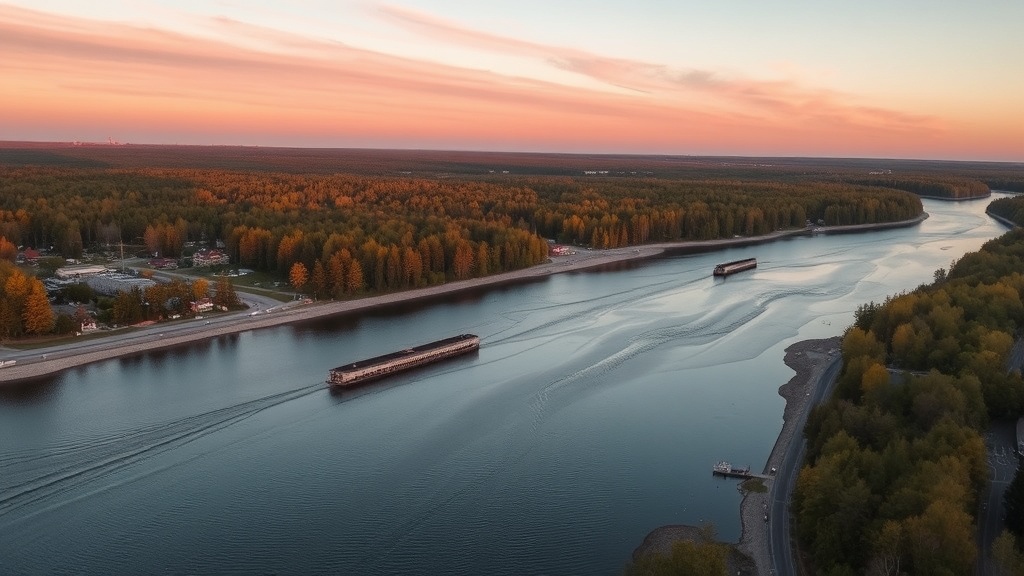
Exploring Deep River: A Local's Guide to Ontario's Hidden Atomic Town

Deep River isn't on most Ontario travel itineraries—and that's exactly why this guide exists. This compact town of roughly 4,000 residents holds one of the province's most unusual origin stories: built from scratch in the 1940s to house scientists working on Canada's atomic energy program. Today, it offers a rare combination of nuclear heritage, pristine Ottawa River waterfront, and small-town quiet that's increasingly hard to find. Whether you're passing through on Highway 17 or looking for an off-grid weekend escape, here's what actually matters about visiting Ontario's atomic town.
What makes Deep River different from other Ontario small towns?
Most Ontario towns grew organically around mills, mines, or railway junctions. Deep River was engineered.
In 1944, the federal government needed housing for researchers at the nearby Chalk River Laboratories—Canada's primary nuclear research facility. Rather than expand existing communities, planners designed a complete town from the ground up. The result feels strangely intentional: curved streets that follow the Ottawa River shoreline, distinct architectural styles (Mid-Century Modern, Colonial Revival, and minimalist workers' cottages), and a commercial district clustered within walking distance of most homes.
The atomic connection isn't hidden. Street names reference scientists—Einstein Avenue, Curie Street, Rutherford Road. The town's central park features a decommissioned CANDU reactor face (don't worry, it's not radioactive) displayed as industrial art. That said, Deep River has outgrown its laboratory-town origins. The nuclear workers still live here, but so do retirees, remote workers from Ottawa and Toronto, and fourth-generation families who stayed long after the plant stopped hiring.
What strikes visitors first is the silence. No highway roar. No freight trains. Just the occasional hum from the Ontario Power Generation facilities across the river and the wind through old-growth white pines.
What is there to do in Deep River?
More than you'd expect for a town this size—but not the kind of activities that require admission tickets.
Outdoor pursuits
The Ottawa River dominates everything here. In summer, locals launch canoes and kayaks from the municipal dock at Deep River Yacht Club (membership not required for day use—just sign the waiver). The current runs strong enough to make upstream paddling a workout; downstream trips toward Rolphton offer calmer water and bald eagle sightings.
Mount Martin Trail delivers the region's best bang-for-buck hike. Twenty minutes of moderately steep climbing ends at a granite lookout with 360-degree views of the river valley. Bring bug spray—the black flies here don't mess around in late May and early June. (Seriously. Long pants. Permethrin-treated socks. You'll thank us.)
In winter, the Deep River Ski Hill operates a T-bar lift and three runs on weekends only. It's old-school Ontario skiing: no snowmaking, no grooming to speak of, $25 lift tickets. The kind of place where teenagers still work the rope tow and the hot chocolate comes from a thermos, not a machine.
Cultural stops
The Deep River & District Community Association runs the town's only museum—part local history, part nuclear science exhibit. Admission is by donation. The collection includes early Geiger counters, photographs of the town's construction, and letters from residents describing life in an isolated scientific outpost during the 1950s.
Here's the thing: there isn't much "entertainment" in the conventional sense. No movie theater. No bowling alley. The last video rental store closed in 2019. What Deep River offers instead is space—physical and mental—to do whatever you actually want to do. Read on the riverbank. Fish for walleye. Build a fire and watch the stars (the dark skies here rival anything in nearby Algonquin Park).
Where should you eat and stay in Deep River?
Options are limited but functional—think necessity over culinary tourism, with one or two exceptions worth seeking out.
| Establishment | Type | What to expect | Price range |
|---|---|---|---|
| The Shining Waters Restaurant | Family dining | Standard Canadian diner fare—burgers, fish and chips, breakfast all day. Nothing fancy, portions generous. | $12–$22 |
| Deep River Pizza | Takeout | Thin crust, heavy on the cheese, open until 10pm (late by local standards). The pepperoni is surprisingly good. | $15–$28 |
| The Ski Hill Snack Bar | Casual (winter only) | Poutine, hot dogs, coffee that tastes like it was brewed in 1987—in the best way. | $5–$12 |
| Highway 17 Farmers' Market | Seasonal market | Saturday mornings July through September. Local honey, maple syrup, vegetables, occasional baked goods. | Variable |
For accommodation, most visitors stay at the Deep River Motel—a 1960s-era motor court that's been renovated enough to offer reliable WiFi but not enough to lose its retro charm. Rooms run $85–$120/night depending on season. Alternatively, several residents rent cottages through Airbnb, typically riverfront properties with kayaks included. These book up fast for August weekends; reserve by May if you're serious.
The catch? Deep River basically shuts down by 9pm. The gas station stays open (Esso on Highway 17), but don't expect late-night food or entertainment. Plan accordingly—grab groceries at the Independent before 8pm, or you'll be eating trail mix for dinner.
Is Deep River worth visiting as a destination?
Not as a primary destination—unless you're specifically interested in atomic history or need a base for Ottawa River paddling. As a stopover or escape, though? Absolutely.
The town works best as a pressure-release valve from city life. It's three hours from Ottawa, four and a half from Toronto, far enough that weekend visitors from those cities are rare. The pace forces a reset. You'll find yourself talking to strangers—actually talking, not just transactional exchanges—because there's nothing else competing for attention.
Worth noting: cell service is spotty. Rogers works reliably in town; Bell cuts out near the water. Download offline maps before arriving. The local library offers free WiFi during business hours if you absolutely must check email.
Deep River doesn't try to impress anyone. It wasn't built for tourists—it was built for physicists who needed somewhere to live while they figured out nuclear fission. That utilitarian DNA persists. The beauty here isn't curated or packaged. It's accidental, weathered, and entirely authentic.
Stop for an afternoon on your way to Algonquin. Stay for a weekend if you need to remember what quiet sounds like. Just don't expect anyone to roll out a red carpet—or apologize for the fact that there isn't one.